How to Choose CNC Machining Tolerances?
Precision vs. Cost Guide


CNC (Computer Numerical Control) machining is renowned for its ability to produce highly precise parts. Many engineers assume that tighter tolerances always lead to better performance, but this isn’t necessarily true. Excessive precision can drive up costs unnecessarily, while insufficient precision may compromise functionality.
This article explores:
✔ How CNC precision is measured
✔ When high precision is critical vs. when it’s overkill
✔ Cost implications of tighter tolerances
✔ Industry-specific precision requirements
✔ How to choose the right tolerance for your project
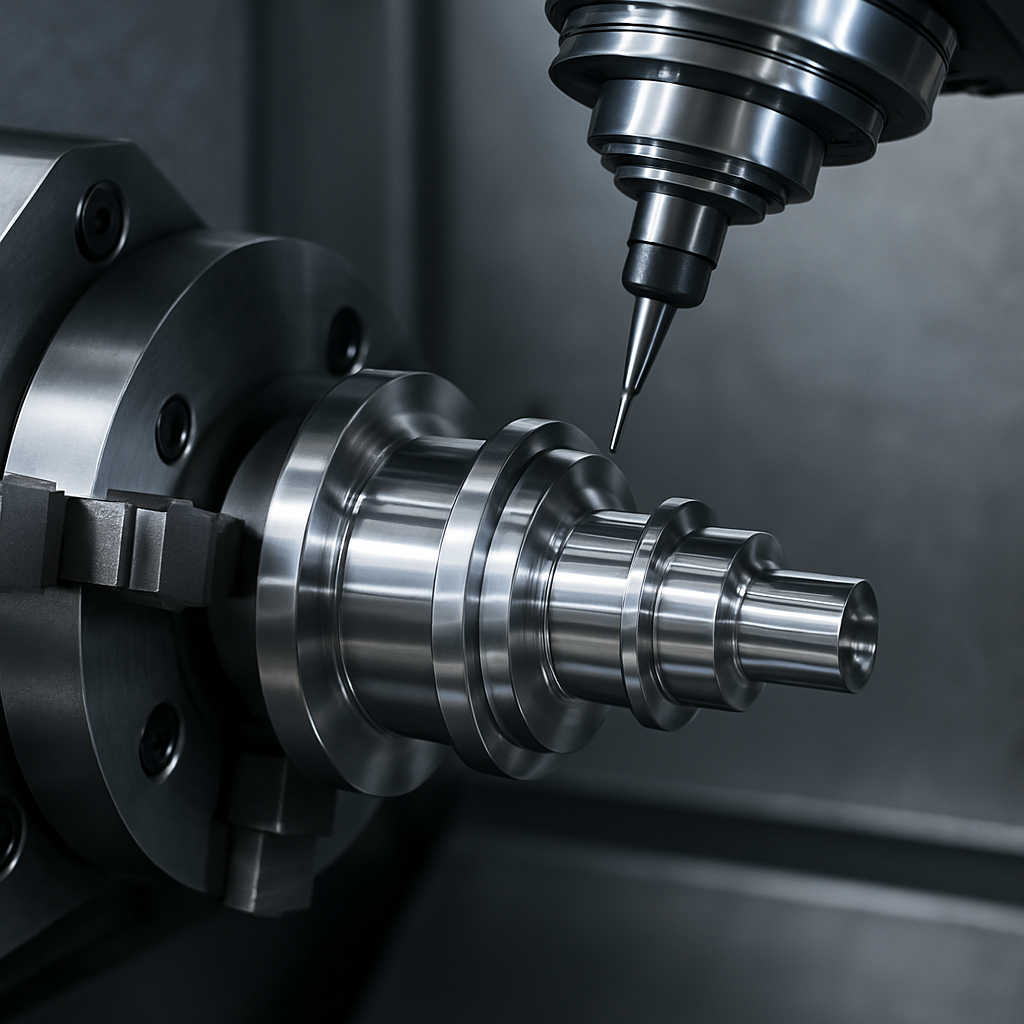
Precision in CNC machining is typically measured in tolerances—the allowable deviation from a specified dimension. Common standards include:
Tolerances are expressed in:
Standard vs. High-Precision CNC Machining
Tolerance Level Typical Range Applications
Not all parts require ultra-tight tolerances. Here’s where high precision is non-negotiable:
Critical components: Turbine blades, fuel nozzles, landing gear
Why? Safety regulations, extreme operating conditions
Typical tolerance: ±0.0127 mm (0.0005") or tighter
Examples: Surgical instruments, implants (hip/knee joints)
Why? Biocompatibility, smooth mating surfaces
Typical tolerance: ±0.025 mm (0.001")
Examples: Fuel injectors, transmission gears
Why? Wear resistance, efficiency
Typical tolerance: ±0.05 mm (0.002")
Pushing for unnecessary precision increases:
✔ Machining time (slower feeds, additional passes)
✔ Tool wear (finer tools break faster)
✔ Inspection costs (CMM, laser scanning)
✔ Scrap rates (more rejected parts)
A. Industrial Machinery (Non-Critical Parts)
Examples: Housings, brackets, covers
Why? No dynamic load, no tight fits
Recommended tolerance: ±0.1 – 0.3 mm
B. Consumer Electronics (Plastic & Aluminum Enclosures)
Examples: Phone cases, laptop frames
Why? Aesthetic fit, not mechanical precision
Recommended tolerance: ±0.2 mm
C. Prototyping & Functional Testing
Why? Faster turnaround, lower cost
Recommended tolerance: ±0.2 – 0.5 mm
A 10x tighter tolerance can increase machining costs by 30-50%. Consider:
A. Design for Manufacturability (DFM) Tips
Use looser tolerances where possible (e.g., non-critical holes)
Specify critical surfaces only (GD&T callouts)
Avoid unnecessary surface finishes (e.g., Ra 0.2 µm vs. Ra 1.6 µm)
B. Alternative Solutions for Tight Tolerances
Post-machining processes (grinding, lapping, EDM)
Selective hardening (only where wear resistance is needed)
Adjust assembly methods (shims, selective fitting)
Higher CNC precision isn’t always better—it’s about matching tolerances to functional needs. Key takeaways:
Ultra-tight tolerances are essential for aerospace, medical, and high-performance automotive parts.
Standard tolerances (±0.1 – 0.3 mm) work for most industrial and consumer products.
Over-specifying precision wastes time and money—optimize using DFM principles.
Consider post-processing for critical areas instead of machining the entire part to high precision.
By understanding real-world requirements, engineers can optimize CNC machining for performance, cost, and efficiency.